Boarding a plane for a fourteen-hour journey can feel incredibly daunting. However, with the right preparation, that extended time in the air transforms from a grueling endurance test into a relaxing start to your vacation. This comprehensive Long-Haul Flight Survival Guide provides you with the exact strategies you need to arrive at your destination feeling refreshed, energized, and ready to explore.
In this guide, we cover everything you must know before you step onto the aircraft. You will discover how to choose the optimal seat, what clothing guarantees maximum comfort, and the precise items you need in your carry-on bag. We also explore expert techniques for securing quality sleep at cruising altitude and outline actionable steps to keep your body healthy and hydrated.
Why You Need a Long-Haul Flight Survival Guide
Spending more than six hours in a pressurized metal tube challenges your body and mind. The cabin air lacks moisture, the seating restricts your movement, and crossing multiple time zones throws your circadian rhythm into chaos. Without a solid strategy, you risk landing with severe jet lag, stiff muscles, and a depleted immune system.
By implementing the strategies in this Long-Haul Flight Survival Guide, you take control of your environment. You learn to hack the seating chart, optimize your nutrition, and leverage specialized gear to create a personal sanctuary in the sky. Let us dive into the fundamental steps of mastering international air travel.
Pre-Flight Preparation: The Foundation of Comfort
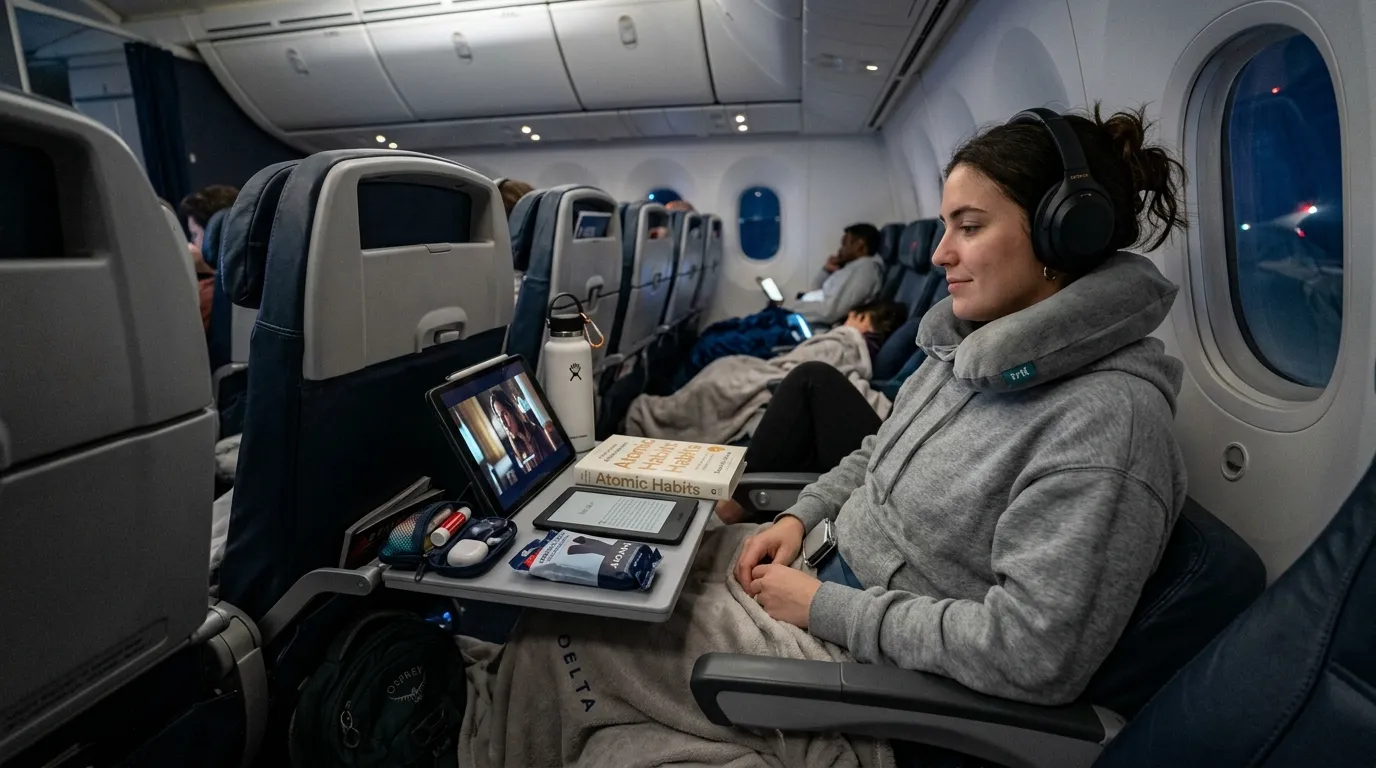
Your flight experience begins long before you arrive at the airport terminal. Strategic preparation ensures you have everything you need accessible and organized.
Master Your Carry-On Strategy
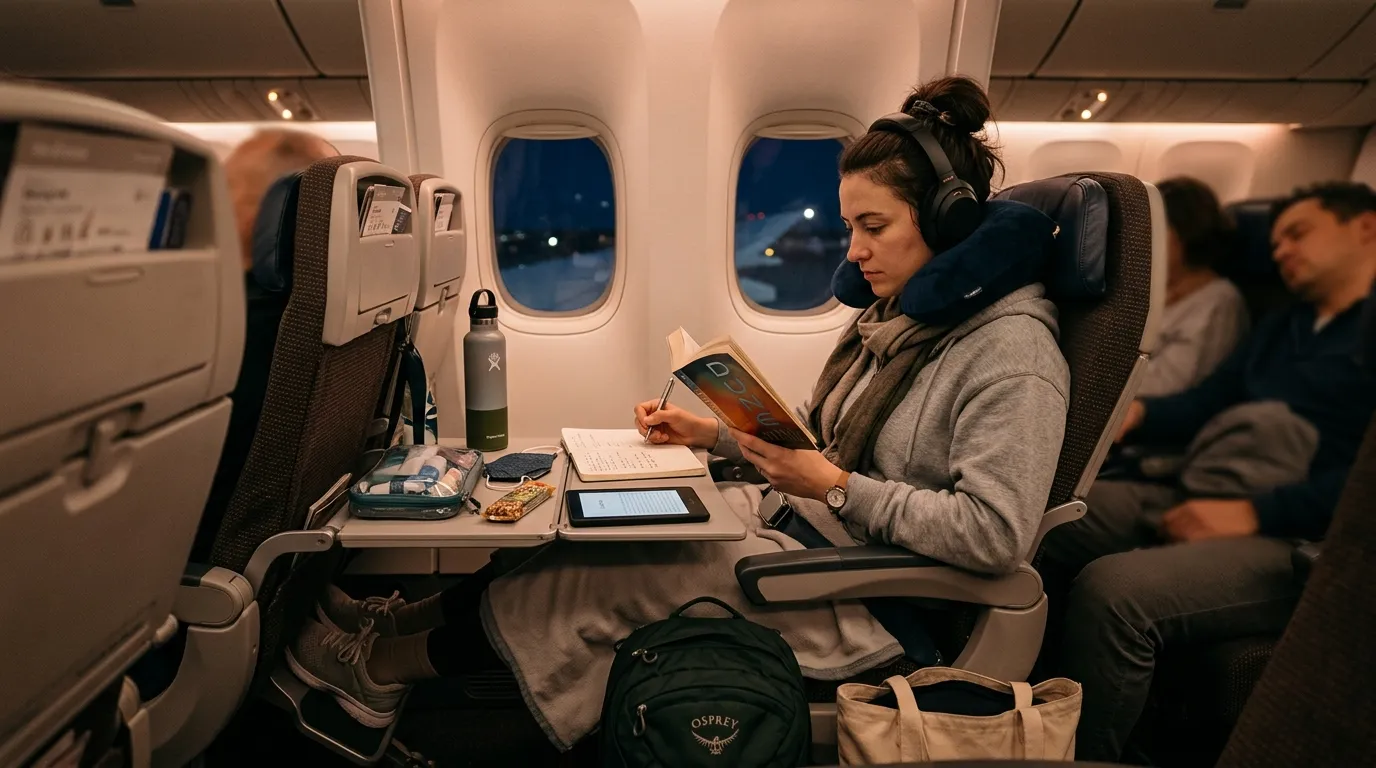
Your under-seat personal item serves as your in-flight command center. Never store essential comfort items in the overhead bin. You want immediate access to your sleep gear, electronics, and toiletries without disturbing your seatmates. Pack a small, dedicated amenity pouch containing your toothbrush, lip balm, travel-sized moisturizer, and medications. For a deeper dive into optimizing your luggage, explore our ultimate carry-on packing guide to maximize your space.
Make sure your liquids comply with the rules set by the Transportation Security Administration (TSA). Keeping your liquids easily accessible speeds up your security process and keeps your flight essentials within arm’s reach.
Adjust Your Internal Clock Early
Jet lag ruins the first few days of any international trip. You can mitigate this by shifting your sleep schedule before departure. If you are flying east, go to bed an hour earlier for a few days before your flight. If you are flying west, stay up a bit later. The Sleep Foundation recommends gradually adjusting your meal times as well, as digestion plays a massive role in regulating your circadian rhythm.
Strategic Seating: Where You Sit Matters
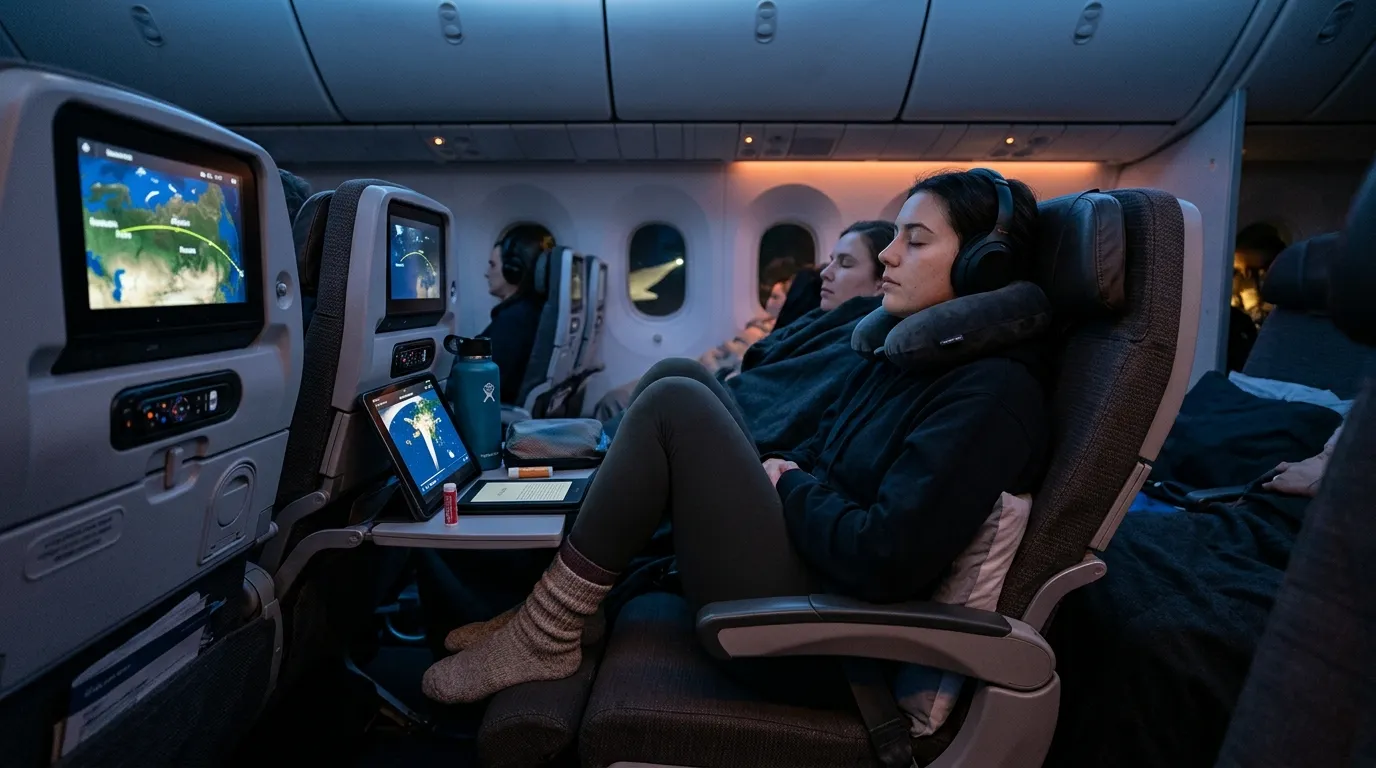
Your seat dictates your entire experience. A poor seat choice guarantees a miserable journey, while a great seat offers extra space and peace. Do not leave your seat assignment to chance. If you want to learn how to score better seats using points, check out our guide on choosing the right travel credit card.
Analyzing Seat Options
Understanding the pros and cons of different seating areas helps you make the right choice for your travel style.
|
Seat Type |
Best For |
Pros |
Cons |
|---|---|---|---|
|
Window Seat |
Sleepers |
Wall to lean on, no disturbances from neighbors |
Hard to access the restroom |
|
Aisle Seat |
Restless Travelers |
Easy restroom access, ability to stretch legs |
Neighbors will wake you to get out |
|
Bulkhead Seat |
Tall Passengers |
No seat reclining into your space, extra legroom |
No under-seat storage, fixed armrests |
|
Exit Row |
Legroom Seekers |
Maximum legroom |
Seats may not recline fully, colder air |
|
Middle Seat |
Nobody |
None |
Shared armrests, cramped space |
If you are traveling with a partner, try booking the aisle and window seats in a three-seat row. Solo travelers often avoid the middle seat, increasing your chances of having the entire row to yourselves. If someone does book the middle seat, they will happily trade for the aisle or window so you can sit together.
Dressing for the Skies: Comfort Meets Function
Cabin temperatures fluctuate wildly during a long flight. You might sweat during boarding and shiver violently over the Atlantic Ocean. The secret to optimal airplane attire relies entirely on smart layering.
The Layering Strategy
Start with a breathable, moisture-wicking base layer, such as a high-quality cotton or merino wool t-shirt. Avoid synthetic fabrics that trap odor and sweat. Add a warm, zip-up sweater or cardigan. A zipper allows you to regulate your temperature without pulling a tight garment over your head in a cramped space. Finally, bring a large, soft scarf. A scarf functions as a fashion accessory, an extra blanket, or a makeshift pillow.
Footwear and Compression
Your feet will swell at high altitudes due to changes in air pressure and prolonged sitting. Wear comfortable, slip-on shoes to get through security quickly and give your feet room to expand. More importantly, invest in high-quality compression socks. These specialized socks promote blood circulation and reduce the risk of Deep Vein Thrombosis (DVT). Put them on before you board the plane to keep your legs feeling fresh upon arrival.
The Sleep Strategy: How to Rest at 35,000 Feet
Sleeping sitting up requires specific tools and behavioral adjustments. You cannot expect to drift off naturally in a noisy, brightly lit cabin.
Essential Sleep Gear
You must block out your environment to trick your brain into sleeping. Invest in a contoured, memory-foam eye mask that does not put pressure on your eyelids. Pair this with premium noise-canceling headphones or high-decibel earplugs. Blocking out the engine drone and the chatter of fellow passengers significantly improves your sleep quality.
Ditch the flimsy, U-shaped neck pillows sold at airport kiosks. Look for structured travel pillows that provide lateral neck support, preventing your head from bobbing and saving you from severe neck pain.
Setting the Scene
Establish a sleep routine similar to your habits at home. When the cabin lights dim, wipe your face with a cleansing cloth, brush your teeth, and apply moisturizer. This signals to your brain that it is time to wind down. Limit your screen time an hour before you plan to sleep, as the blue light from the entertainment system suppresses melatonin production.
Hydration and Nutrition: Fueling Your Body Right
The humidity level inside an airplane cabin hovers around 10 to 20 percent, which is drier than most deserts. This extreme environment saps the moisture from your skin, eyes, and internal organs.
The Hydration Rule
You must drink significantly more water than you would on the ground. Bring a large, empty reusable water bottle through airport security and fill it before boarding. Do not rely solely on the flight attendants for water, as those tiny plastic cups will not keep you adequately hydrated. Avoid alcohol and heavy caffeine consumption. Both act as diuretics, compounding the dehydrating effects of the cabin air.
Smart Snacking
Airline food heavily relies on sodium and carbohydrates, which causes bloating and lethargy. Pack your own nutrient-dense snacks. Almonds, walnuts, protein bars, and fresh fruit provide sustained energy without the sugar crash. Eating light, easily digestible meals helps prevent the sluggishness that often accompanies long-haul travel. If you want to refine your travel diet, read our insights on maintaining your health while traveling.
Entertainment and Mental Health: Beating Boredom
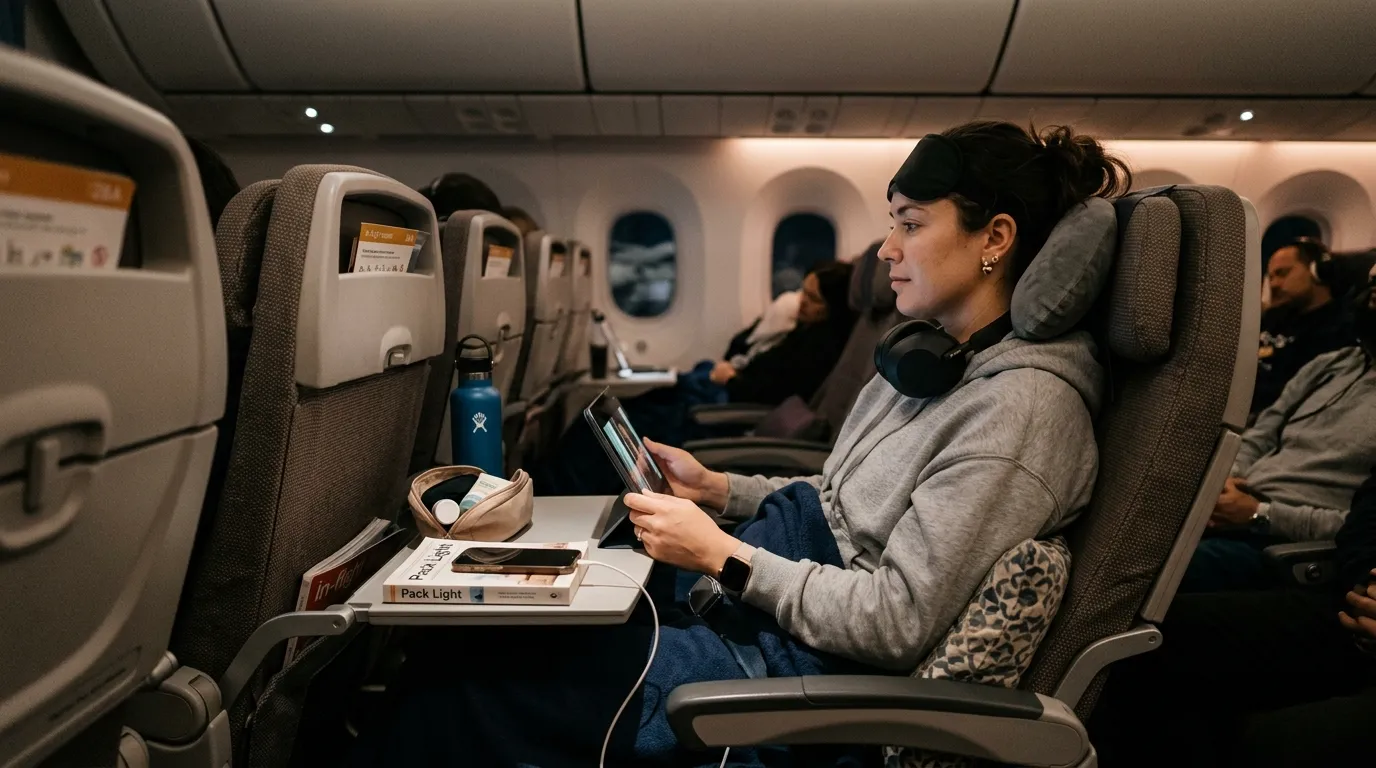
A fourteen-hour flight provides a massive expanse of uninterrupted time. Without a plan, boredom quickly turns into severe travel anxiety.
Diversify Your Options
Do not depend entirely on the in-flight entertainment system. Screens glitch, audio jacks break, and sometimes the movie selection just disappoints. Download a mix of entertainment directly to your personal devices before you leave home. Include a few movies, several podcast episodes, and offline music playlists.
Bring non-digital entertainment as well. A paperback book, a magazine, or a crossword puzzle gives your eyes a necessary break from glowing screens. Changing the medium of your entertainment helps break the flight into manageable, psychological chunks.
Productivity in the Sky
Long flights offer a rare opportunity for deep, focused work. Without the constant ping of emails and text messages, you can draft reports, outline projects, or organize your digital photo library. Ensure your laptop is fully charged before boarding, as not all economy seats feature reliable power outlets.
Physical Wellness: Preventing Aches and Pains
Sitting motionless for extended periods damages your posture and slows your circulation. You must actively manage your physical wellness to avoid landing with a stiff back and swollen ankles.
In-Seat Stretches
You can perform simple exercises without leaving your seat. Roll your ankles in slow circles, pull your knees to your chest, and stretch your neck from side to side. These micro-movements keep your blood flowing and prevent your joints from locking up.
Walk the Aisles
Commit to standing up and walking the length of the plane every two to three hours. Walk to the galley, do a few calf raises, and stretch your lower back. The World Health Organization (WHO) stresses the importance of movement during travel to prevent blood clots and promote overall cardiovascular health. Do not worry about looking silly; experienced travelers understand the necessity of in-flight mobility.
Common Mistakes to Avoid
Even seasoned flyers occasionally fall into traps that ruin their flight experience. Avoid these frequent missteps:
- Overpacking the Carry-On: Stuffing your under-seat bag to the brim eliminates your legroom. Pack only the absolute essentials and put the rest in the overhead bin.
- Relying on Airplane Blankets: Airline blankets are thin, flimsy, and rarely washed between flights. Bring your own travel blanket or a thick scarf.
- Wearing Contact Lenses: The dry cabin air turns contact lenses into sandpaper. Wear your glasses during the flight and switch back to contacts after you land.
- Watching the Flight Tracker: Staring at the little airplane icon creeping across the digital map makes time stand still. Turn off the flight tracker and immerse yourself in a movie or book.
- Ignoring Skin Care: Skipping moisturizer leads to dry, flaky skin upon arrival. Apply a heavy moisturizer and lip balm multiple times throughout the flight.
Pro Tips for an Elite Experience
Take your travel game to the next level by adopting the habits of elite global road warriors.
- The Foot Hammock: Invest in a portable foot hammock that hangs from the tray table. Elevating your feet relieves pressure on your lower back and significantly reduces ankle swelling.
- Hydration Multipliers: Add an electrolyte packet to your water bottle mid-flight. This helps your body absorb water more efficiently than drinking plain water alone.
- The Mid-Flight Freshen Up: Pack a clean pair of underwear, a fresh t-shirt, and a travel-sized deodorant. Changing your clothes two hours before landing provides an incredible psychological boost and makes you feel human again.
- Noise-Canceling Earbuds for Sleep: Bulky over-ear headphones make side-sleeping impossible. Buy a pair of low-profile, noise-canceling earbuds specifically designed for sleeping.
- Strategic Fasting: Some frequent flyers swear by fasting during the flight to reset their internal clocks rapidly. Eating your first heavy meal at the normal dinner time of your destination can drastically reduce jet lag. If you want to master this, read our comprehensive post on combating jet lag.
Conclusion
Conquering a long-distance flight does not require magic; it simply requires a proactive approach. By following this Long-Haul Flight Survival Guide, you equip yourself with the knowledge to sleep soundly, stay healthy, and arrive at your destination with energy to spare. Remember to choose your seat wisely, dress in comfortable layers, and prioritize your hydration above all else. Your next grand adventure awaits, and the journey there can be just as enjoyable as the destination itself. Start packing your carry-on today and prepare to fly like a seasoned professional.
Frequently Asked Questions
1. What is the best seat to book on a long-haul flight?
The best seat depends on your priorities. A window seat is perfect for sleeping because it gives you a wall to lean against and protects you from aisle traffic. An aisle seat is ideal if you like to stretch your legs frequently and access the restroom without disturbing others.
2. How do I avoid jet lag after a long flight?
Adjust your sleep schedule a few days before departure, stay hydrated, and avoid alcohol on the plane. Once you land, force yourself to adapt to the local time zone immediately. Expose yourself to natural sunlight during the day to help reset your internal circadian rhythm.
3. What should I wear on a 15-hour flight?
Wear loose-fitting, breathable layers. Start with a soft t-shirt, add a zip-up sweater, and wear comfortable joggers or leggings. Avoid tight waistbands, stiff jeans, and heavy boots. Always wear compression socks to improve blood circulation.
4. How can I sleep comfortably in an economy seat?
Invest in high-quality sleep accessories. Bring a structured neck pillow that supports your chin, a contoured eye mask, and noise-canceling headphones. Establish a pre-sleep routine, limit screen time, and recline your seat as much as courteously possible.
5. Can I bring my own food on an international flight?
Yes, you can bring solid foods through airport security and onto the plane. Granola bars, nuts, sandwiches, and fresh fruit are excellent options. However, be aware that you may need to consume or discard fresh produce before passing through customs at your destination.
6. Are compression socks really necessary for flying?
Yes, compression socks are highly recommended for any flight over four hours. They help maintain blood flow from your legs back to your heart, reducing swelling, leg fatigue, and the risk of Deep Vein Thrombosis (DVT).
7. How do I keep my skin from drying out on the plane?
The cabin air is extremely dry. Drink plenty of water and avoid alcohol. Bring a travel-sized, heavy-duty moisturizer and apply it to your face and hands every few hours. Use hydrating eye drops and a thick lip balm to protect sensitive areas.
8. What items should absolutely go in my under-seat bag?
Keep your vital items within arm’s reach. Your under-seat bag should hold your travel documents, wallet, medications, electronics, chargers, sleep accessories (eye mask, earplugs, neck pillow), and a reusable water bottle.
9. How often should I get up and walk around during a long flight?
You should aim to stand up, stretch, and walk down the aisle every two to three hours. This keeps your joints lubricated, prevents muscle stiffness, and promotes healthy blood circulation throughout your body.
10. Is it a good idea to take sleeping pills on a plane?
Use extreme caution with sleeping pills. Prescription sleep aids can leave you groggy and disoriented upon arrival, and they keep you immobile for too long, increasing DVT risks. Try natural alternatives like melatonin or magnesium first, and always test any medication at home before taking it on a flight.