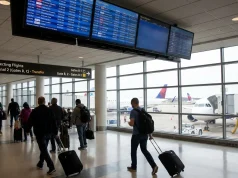
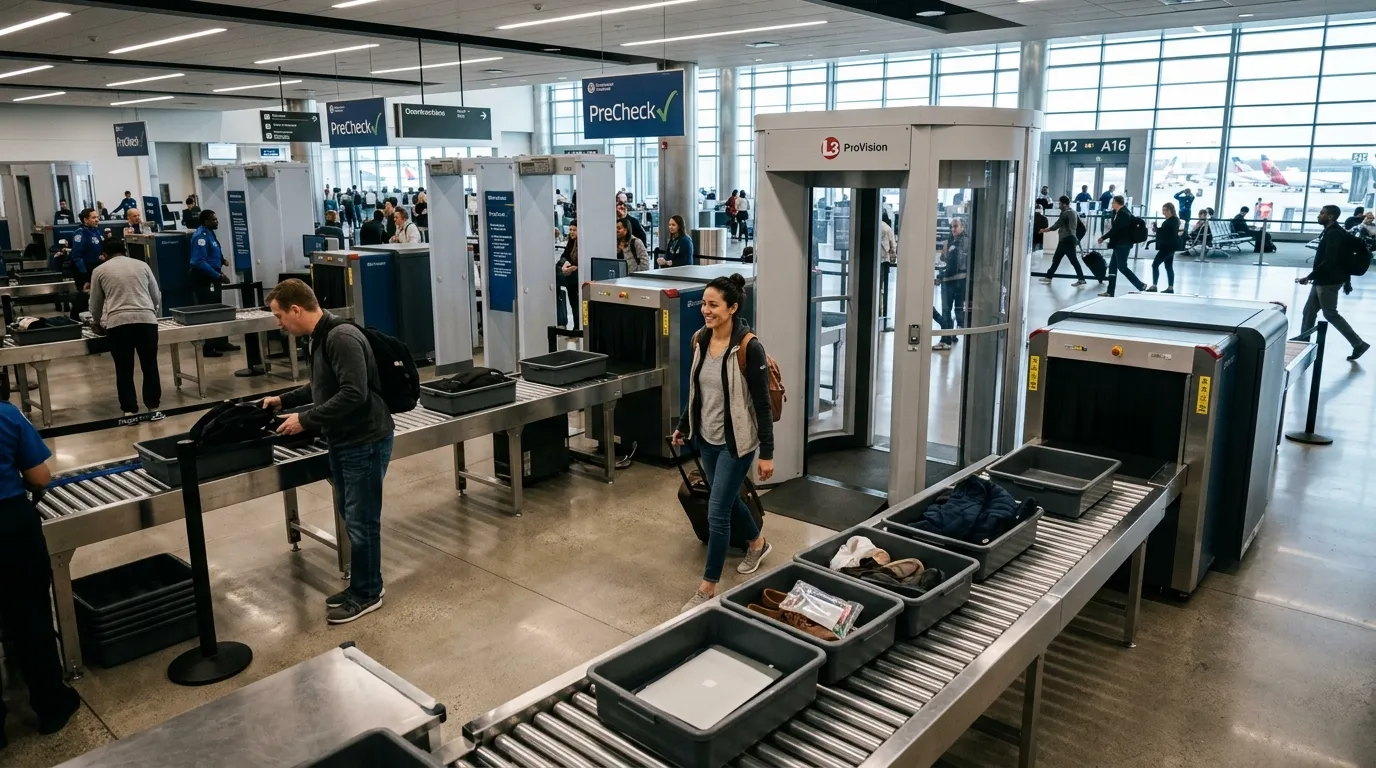
Navigating crowded terminals can feel overwhelming. By mastering essential Airport Security Tips, you can breeze through checkpoints, eliminate travel anxiety, and reach your departure gate with plenty of time to spare.
This comprehensive guide reveals exactly how to conquer the checkpoint. You will learn strategic packing methods, optimal clothing choices, and insider strategies for navigating lines. Discover practical ways to protect your belongings, speed up screening, and start your vacation flawlessly.
Why You Need Reliable Airport Security Tips
Airports represent the gateway to your next great adventure or crucial business meeting. However, the screening process often stands as the most stressful hurdle of your journey. Security protocols exist to keep everyone safe, but the rules constantly evolve. New scanning technologies, updated liquid regulations, and changing identification requirements mean that what worked five years ago might slow you down today.
Understanding how to navigate this environment efficiently saves you precious time. It prevents the panic of rummaging through your bag while fifty people wait behind you. By implementing a solid strategy, you transform a chaotic experience into a smooth, predictable routine. You also protect your belongings from damage or loss during the frantic unzipping and repacking phase. Let us explore the exact steps you must take to master the screening process.
Before You Leave: Preparation is Key
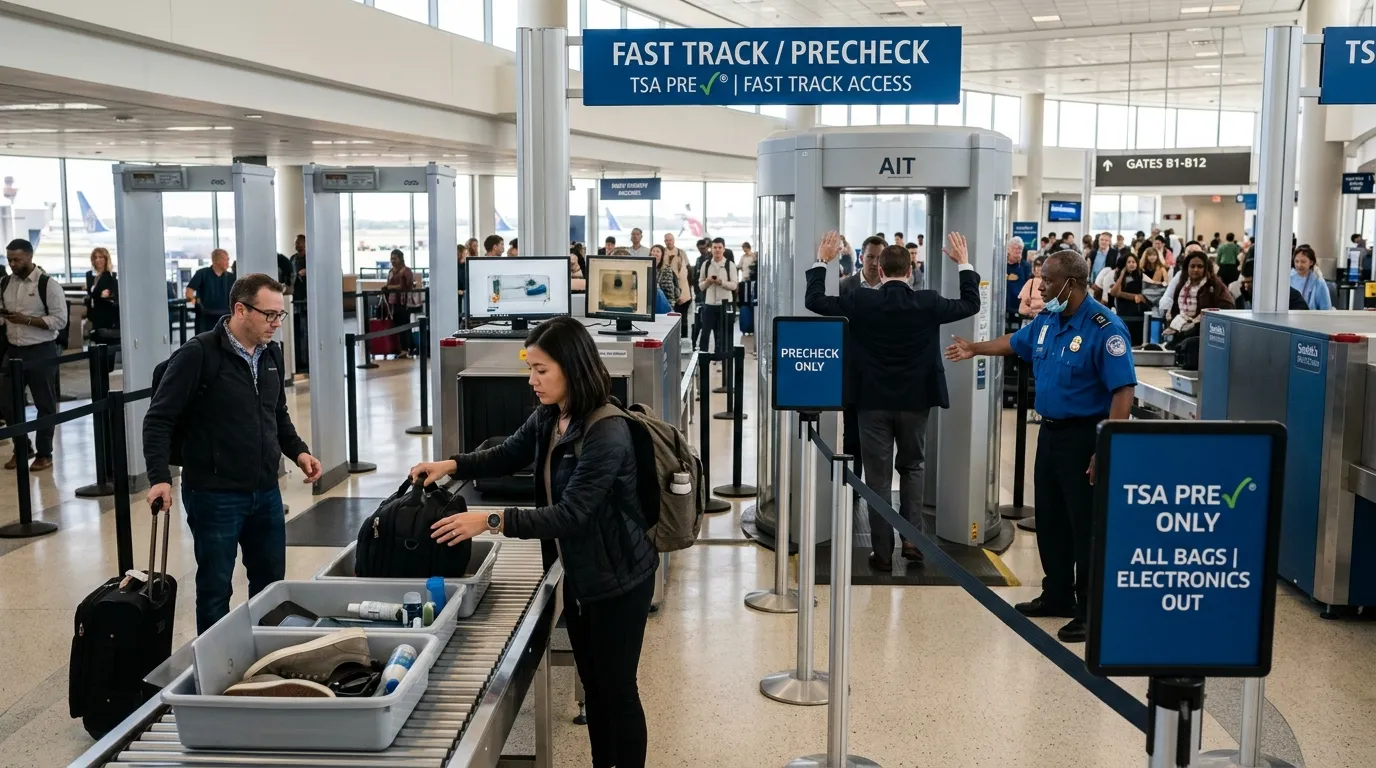
Your success at the checkpoint begins in your living room. How you pack your bags directly influences how quickly you move through the line. Strategic packing prevents secondary screenings and keeps your items organized.
Master the 3-1-1 Liquids Rule
Liquid regulations trip up more travelers than any other rule. You must pack all liquids, aerosols, gels, creams, and pastes in containers holding 3.4 ounces (100 milliliters) or less. These items must fit comfortably into one clear, quart-sized, resealable bag. You are allowed one bag per passenger.
To optimize this process, keep your liquids bag easily accessible. Pack it at the very top of your carry-on or in an exterior pocket. When you reach the conveyor belt, you can pull it out instantly. If you need larger quantities of specific items like sunscreen or shampoo, pack them securely in your checked luggage instead. Review the official guidelines on the Transportation Security Administration (TSA) website to ensure your specific items comply.
Pack Electronics Strategically
Laptops, tablets, and gaming consoles require separate screening at most standard checkpoints. You will need to place any electronic device larger than a standard smartphone into its own bin, with nothing resting on top or below it.
Do not bury your laptop under layers of clothing. Use a bag with a dedicated, easy-to-reach technology compartment. If you use a protective sleeve, ensure it is thin and easily removable. Manage your cords and chargers by keeping them coiled in a separate pouch. A tangled web of wires often looks suspicious on an X-ray monitor, prompting agents to pull your bag for a manual search. If you are looking for more ways to optimize your luggage, check out our ultimate carry-on packing guide to maximize your space.
Organize Your Travel Documents
Fumbling for your identification and boarding pass creates unnecessary delays. Keep your physical ID and a printed boarding pass (or your smartphone with a digital pass) in your hand or a dedicated, easy-to-reach pocket. Once the agent verifies your identity, immediately secure your ID back in its designated spot. Many travelers misplace their driver’s licenses by casually tossing them into a screening bin. For international travel, ensure your passport is readily available and valid for at least six months beyond your travel dates, as recommended by the U.S. Department of State.
Dressing for the Security Checkpoint
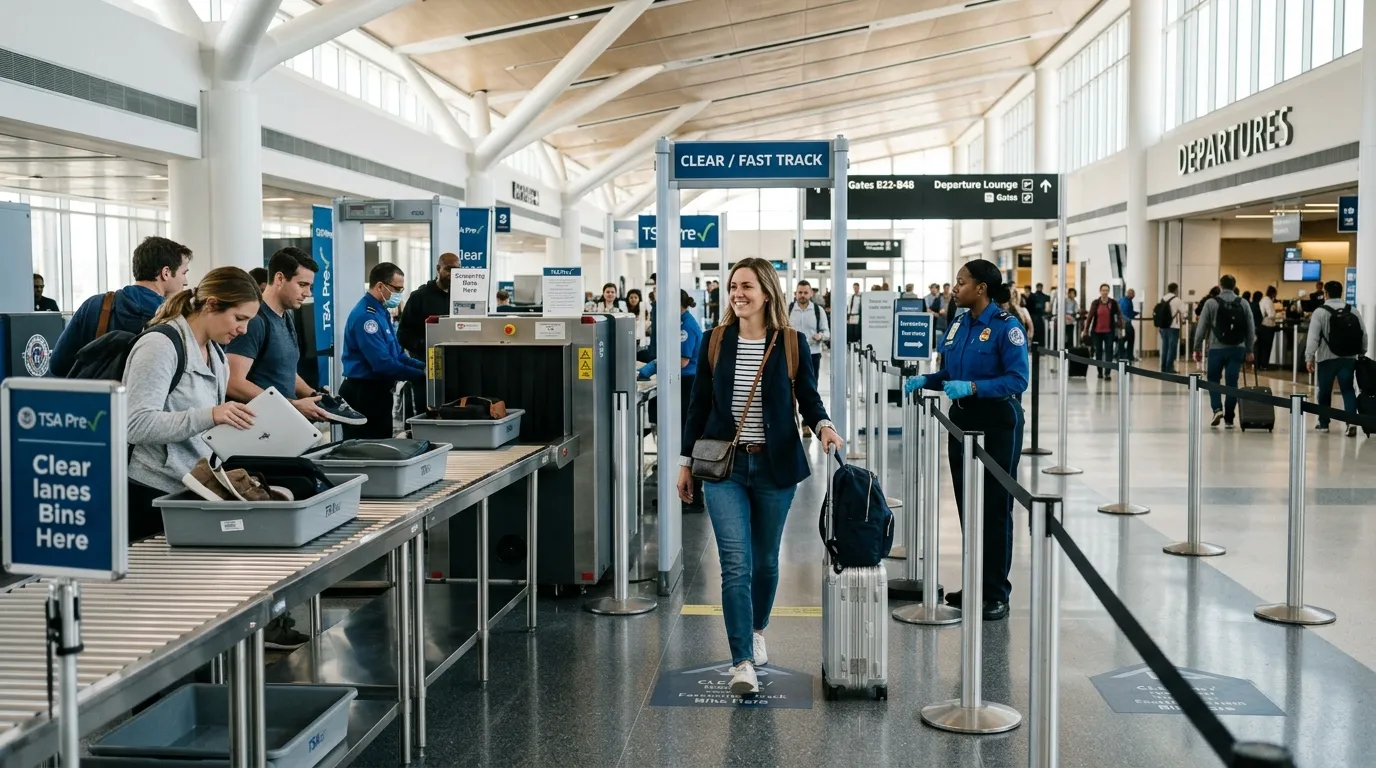
Your outfit significantly impacts your screening speed. Agents must ensure you are not concealing prohibited items, and complex clothing makes their job harder.
Footwear Choices Matter
Standard screening requires you to remove your shoes. Wear slip-on shoes, loafers, or simple sneakers that you can take off and put back on in seconds. Avoid boots with complex lacing systems, high heels with metal shanks, or sandals with dozens of straps. Always wear socks. Walking barefoot across the terminal floor exposes you to bacteria and fungi.
Ditch the Complex Accessories
Metal detectors and advanced imaging technology will pick up heavy jewelry, large belt buckles, and watches. Leave the bulky metal accessories packed in your carry-on until you pass through screening. If you must wear a belt, choose one with a plastic buckle, or take it off while waiting in line so you are ready when you reach the bins. Empty your pockets completely before stepping into the scanner. Even a forgotten tissue or a gum wrapper can trigger an anomaly on the body scanner, resulting in an invasive pat-down.
Trusted Traveler Programs Compared
If you fly more than twice a year, enrolling in a trusted traveler program offers the best return on investment for your time. These programs verify your background beforehand, allowing you to use expedited lanes.
|
Feature |
TSA PreCheck |
Global Entry |
CLEAR Plus |
|---|---|---|---|
|
Best For |
Domestic US Travelers |
International US Travelers |
Frequent flyers wanting to skip ID lines |
|
Shoe Removal |
No |
No (includes PreCheck) |
Depends on PreCheck status |
|
Laptop Removal |
No |
No (includes PreCheck) |
Depends on PreCheck status |
|
Average Wait |
Under 5 minutes |
Under 5 minutes |
Varies, skips the ID checker |
|
Validity |
5 Years |
5 Years |
1 Year |
Combining CLEAR with TSA PreCheck provides the ultimate frictionless experience. You verify your identity biometrically at the CLEAR kiosk, and an ambassador escorts you directly to the physical screening machines in the PreCheck lane. If you want to dive deeper into maximizing these memberships, read our comprehensive guide to elite travel status.
Strategies for the Security Line
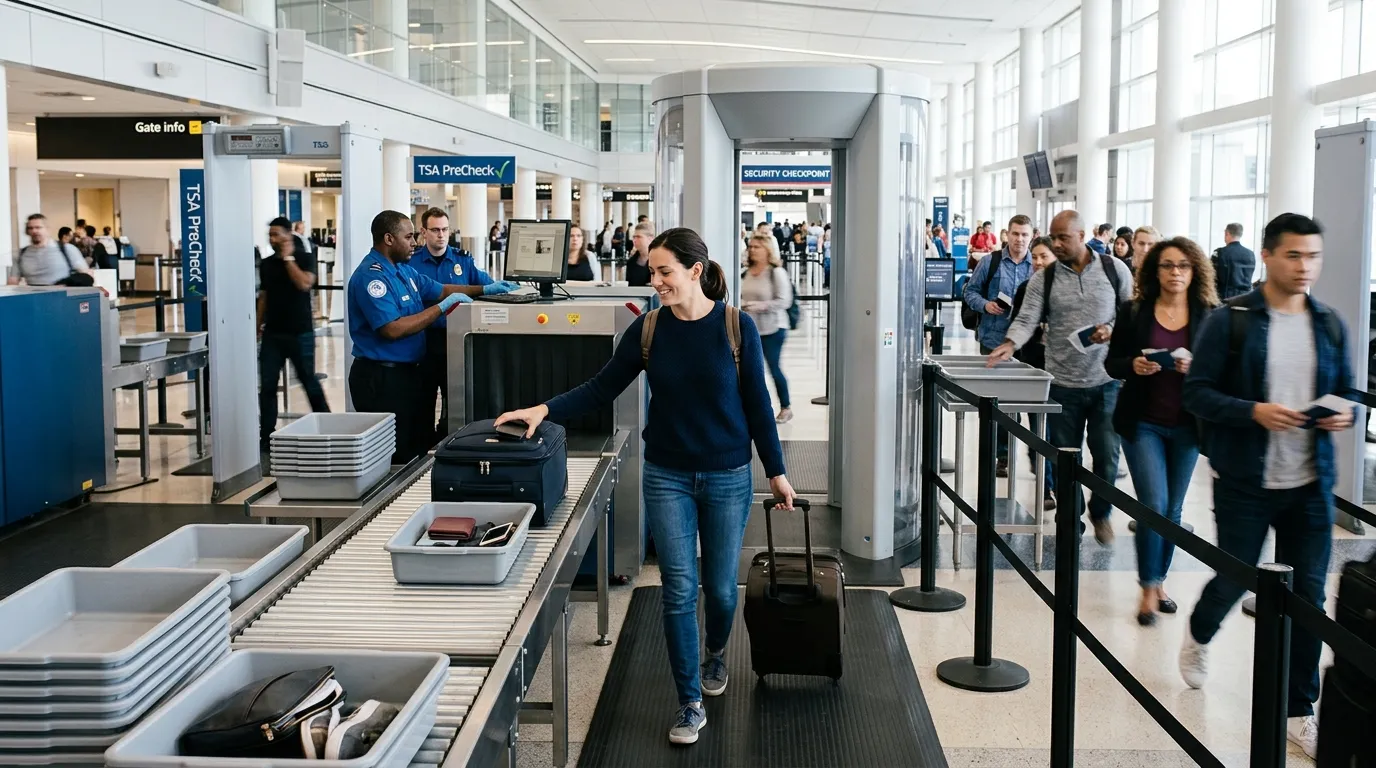
Once you enter the queue, your behavior dictates how smoothly the next five minutes will go. Stay alert and observe the environment.
Choose the Right Lane
Human psychology dictates that most people veer to the right when given a choice. Look to the left lanes; they are often shorter. Additionally, evaluate the people in front of you. A lane filled with business travelers carrying single briefcases will move drastically faster than a lane with families pushing large strollers and managing multiple toddlers.
The Bin Strategy
Efficiency at the conveyor belt is an art form. Step up to the table and grab the necessary number of bins.
- Place your shoes and light jacket in the first bin.
- Put your laptop (removed from its case) in the second bin.
- Place your carry-on bag directly on the belt if it fits, or in a bin if required by the local agents.
- Put your liquids bag and any small pocket items (keys, wallet, phone) into your personal bag before putting it on the belt. Never put loose valuables loosely into a bin, as they easily slide around or get left behind.
Traveling with Children and Equipment
Flying with kids introduces a new layer of complexity to the screening process. You must manage your items while keeping your children calm and contained.
Children under 12 can leave their shoes on during standard TSA screening. However, all baby gear must go through the X-ray machine. You must collapse strollers and fold up car seats so they fit through the scanner tunnel. If an item is too large, an agent will manually inspect it. The Federal Aviation Administration (FAA) highly recommends using approved child restraint systems on board, so bringing your car seat is a smart move, despite the extra effort at security.
Liquid rules also flex for parents. You are permitted to bring breast milk, formula, and baby food in quantities greater than 3.4 ounces. Inform the officer that you are carrying these items before your bags go through the machine. They will require additional screening, often involving a simple vapor test to ensure the liquids are safe.
Understanding Advanced Screening Technology
Many modern airports now utilize Computed Tomography (CT) scanners for carry-on baggage. These machines provide agents with a 3D view of your bag’s contents. If your lane uses a CT scanner, you usually do not need to remove your laptop or your liquids. Pay close attention to the specific instructions given by the agents, as the rules change depending on the exact machine you are facing.
If your bag triggers an alarm, do not panic. The agent will ask if they can open your bag. Consent politely and let them perform their search. They are usually looking for a dense cluster of cables, a forgotten water bottle, or an unusually shaped souvenir.
Common Mistakes to Avoid
Even seasoned travelers occasionally make errors that bring the screening line to a halt. Avoid these frequent missteps:
- Bringing Full Water Bottles: You cannot bring a full bottle of water through the checkpoint. Bring an empty reusable bottle and fill it at a hydration station near your gate.
- Forgetting Pocket Contents: Coins, lip balm, and boarding passes left in pockets will trigger the body scanner. Double-check your pockets before stepping in.
- Arguing with Agents: If an agent confiscates an oversized liquid, let it go. Arguing will only delay you further and could result in law enforcement intervention.
- Packing Prohibited Souvenirs: Snow globes contain liquid and must be checked if they are larger than a tennis ball. Toy weapons will always be confiscated.
- Waiting to Unpack: Do not wait until you are standing directly in front of the X-ray belt to start taking off your shoes and unzipping your bag. Prep while you are waiting in line.
Pro Tips and Expert Insights
To truly master the airport environment, adopt the habits of elite road warriors.
- The Coat Trick: If you are traveling during winter, put your phone, wallet, passport, and keys into the zippered pockets of your heavy coat while you are in line. When you reach the bins, you simply take off the coat and place it in the bin. Everything is secured in one place.
- Freeze Your Liquids: If you need to bring a liquid that exceeds the 3.4-ounce limit (like a specific beverage or liquid medication), freeze it completely solid. As long as it is frozen solid when presented for screening, it is permitted.
- Pack Powders Carefully: Powdered substances larger than 12 ounces (like protein powder or makeup) require separate screening. Take them out of your bag just like you do with a laptop to speed up the process.
- Use a Dedicated Tech Pouch: Keep all your charging bricks, cables, and adapters in one clear zippered pouch. If an agent needs to inspect your electronics, they can see everything clearly without pulling apart your entire bag. This pairs perfectly with our minimalist travel gear list recommendations.
Protecting Your Valuables
The security checkpoint is a high-traffic area, making it a hotspot for misplaced items and, occasionally, theft. Never send your laptop or wallet through the X-ray machine until you are ready to walk through the body scanner yourself. If you send your items through early, they will sit unattended on the other side while you wait for your turn to be screened.
When collecting your items, grab your bins and move to the designated recomposure benches. Do not stand at the end of the conveyor belt slowly putting your belt back on. Moving out of the way keeps the line flowing and gives you a safe space to inventory your belongings before heading to the gate.
Conclusion
Mastering the checkpoint requires a blend of smart preparation, situational awareness, and the right gear. By applying these Airport Security Tips, you take control of the most unpredictable part of your travel day. Organize your liquids, dress strategically, and consider a trusted traveler program to bypass the crowds. Prepare your bags tonight, arrive with confidence tomorrow, and enjoy a stress-free start to your journey.
FAQs
1. Do I have to take my laptop out of my bag at security?
In standard security lanes, yes. You must remove laptops and large tablets and place them in their own bin. However, if you are in a TSA PreCheck lane or the airport utilizes advanced CT scanners, you can usually leave all electronics inside your bag.
2. Can I bring snacks through airport security?
Absolutely. Solid foods like granola bars, sandwiches, crackers, and fruit are perfectly fine to bring through the checkpoint. However, spreadable foods like peanut butter, hummus, or yogurt are considered liquids and must adhere to the 3.4-ounce rule.
3. What happens if I accidentally bring a prohibited item?
If you bring an oversized liquid or a prohibited item (like a pocket knife), the security officer will give you a few options. You can surrender the item to them, put it in a checked bag, give it to a non-traveling companion, or take it to your car.
4. How early should I arrive for security screening?
A general rule of thumb is to arrive two hours before a domestic flight and three hours before an international flight. This buffer absorbs unexpected delays like long security queues, traffic jams, or check-in desk issues.
5. Are medications exempt from the 3-1-1 liquid rule?
Yes. Medically necessary liquids, medications, and creams in excess of 3.4 ounces are allowed. You must declare these items to the security officer before screening begins. They may undergo additional testing.
6. Can I bring my own water bottle?
Yes, you can bring your own reusable water bottle, but it must be completely empty when you go through the X-ray machine. Once you clear the checkpoint, you can fill it up at any water fountain or restaurant inside the terminal.
7. Do children need TSA PreCheck to use the PreCheck lane?
Children aged 12 and under can use the TSA PreCheck lane when traveling with an eligible parent or guardian. Children aged 13 to 17 can also join you, provided the TSA PreCheck indicator appears on their boarding pass.
8. Will my joint replacement trigger the metal detector?
Yes, artificial joints and metal implants will likely set off standard metal detectors. Inform the officer about your implant before screening. They will typically direct you to the advanced imaging technology (body scanner) or perform a manual pat-down.
9. Can I bring makeup through the security checkpoint?
Solid makeup like lipstick, powder foundations, and solid blushes have no restrictions. Liquid makeup, such as liquid foundation, mascara, lip gloss, and concealer, must follow the 3.4-ounce liquid rule and fit inside your quart-sized bag.
10. Why do security agents sometimes swab my hands or luggage?
Agents use swabs to test for traces of explosive residue. This is a routine, random procedure and is nothing to worry about. The swab is placed in a machine that analyzes the sample in seconds. Keep your hands clean and cooperate to keep the process moving quickly.