
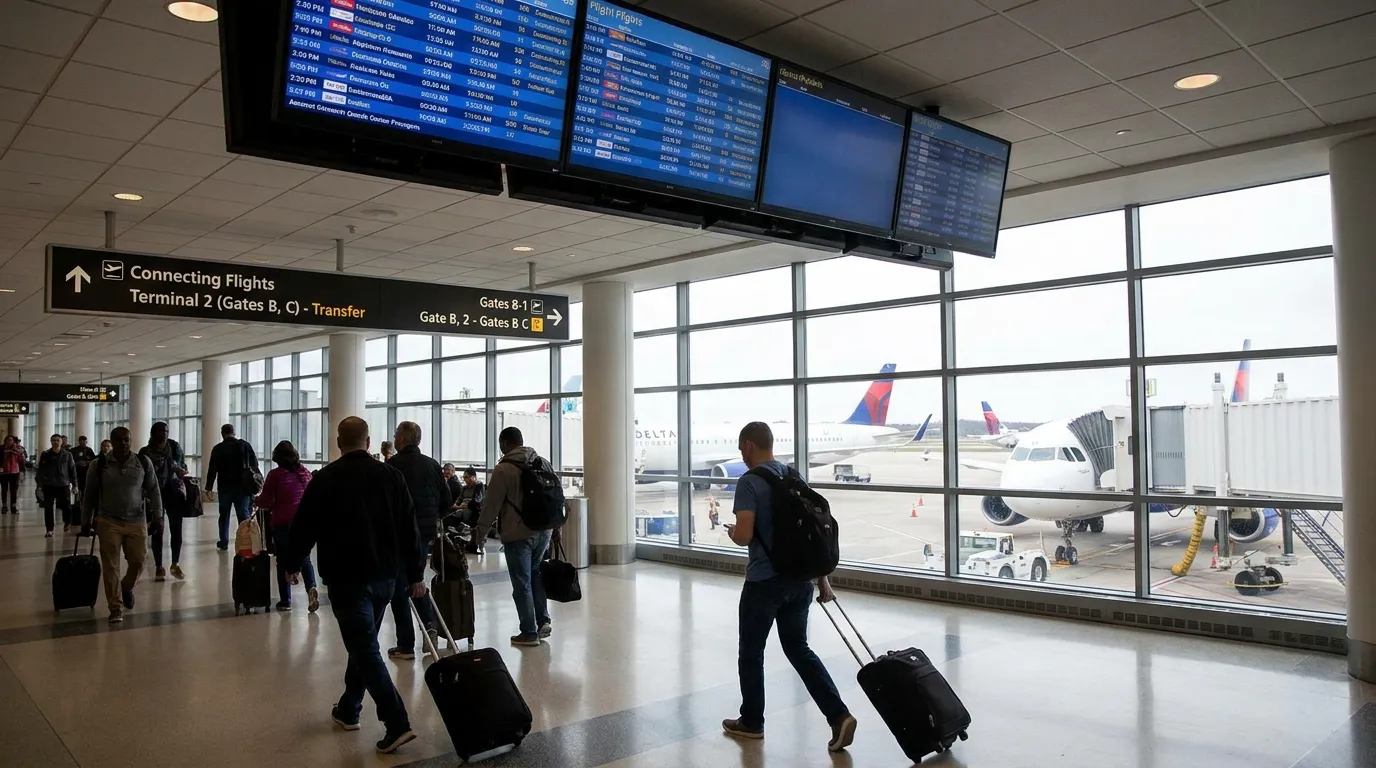
If you are planning an upcoming trip and wondering exactly what is a connecting flight, you are in the right place. Navigating airports can be stressful, but understanding your itinerary makes travel seamless.
This guide explains exactly what is a connecting flight, how it differs from a layover, and what happens to your luggage. You will learn expert tips for navigating terminals, understanding your ticket, avoiding common transit mistakes, and ensuring you reach your final destination smoothly and stress-free.
Understanding What is a Connecting Flight
When travelers ask what is a connecting flight, they are usually looking at an itinerary that requires them to change airplanes to reach their final destination. Instead of flying straight from your origin to your destination, your journey is broken into two or more legs. You will disembark the first aircraft, walk through the transit airport, and board a second aircraft.
To give you a clear connecting flight example, imagine you are flying from New York to Rome. If there is no direct path, you might fly from New York to Paris, get off the plane, and then board a new flight from Paris to Rome. This intermediate stop is the connection. Understanding what is a connecting flight helps you pack appropriately, manage your time, and reduce travel anxiety.
Many people wonder what is a connecting flight airlines define as a legal connection. Airlines establish a Minimum Connection Time (MCT) for every airport. This ensures you have enough time to get from your arrival gate to your departure gate. If you buy a connecting flight ticket as a single itinerary, the airline guarantees this connection time is viable.
The Importance of the Booking Process
When you book your trip, the reservation system automatically calculates what is a connecting flight timing that works safely. If you miss your second leg due to the first flight being delayed, the airline must rebook you on the next available plane. This protection only applies if you book the flights together.
Connecting Flight vs Layover
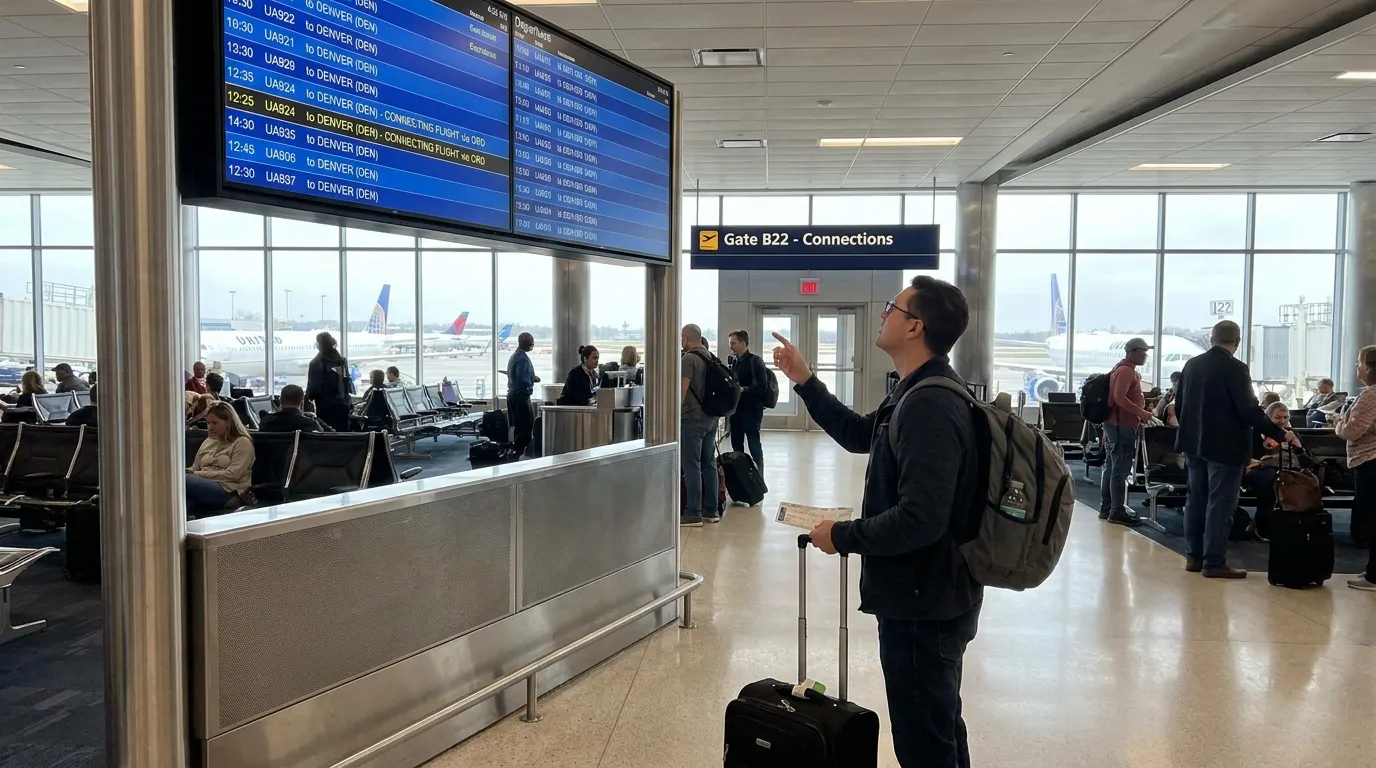
A common point of confusion is connecting flight vs layover. These terms are frequently used interchangeably, but they have distinct meanings in the travel industry. A connecting flight refers specifically to the secondary airplane you will board to continue your journey. A layover, on the other hand, refers to the actual time you spend waiting on the ground between those two flights.
If you spend three hours in a terminal waiting for your next departure, that three-hour block is the layover. The airplane you get on after those three hours is the connecting flight.
Connecting Flight vs Direct Flight
Another important comparison is connecting flight vs direct flight. A direct flight takes you from your origin to your destination without requiring you to change planes. Note that a direct flight might make a stop to pick up passengers, but you remain on the aircraft. A nonstop flight makes no stops at all. In contrast, a connecting flight explicitly requires you to exit the aircraft, gather your carry-on items, and physically move to a new departure gate to board a completely different airplane.
Baggage Rules: What Happens to Your Luggage?
One of the biggest anxieties passengers have when asking what is a connecting flight involves their checked luggage. Will it follow you? Do you have to pick it up?
If you say, “I have a connecting flight with the same airline,” the process is usually seamless. For domestic travel within the United States, your checked baggage will be tagged to your final destination. Baggage handlers will move your suitcase from the first plane to the second plane while you walk to your next gate. You will not see your checked bag until you arrive at your final stop.
International Baggage Rules
International travel changes the rules. If you are flying back into the United States from abroad, you must collect your luggage at your first point of entry, clear customs, and then drop the bag at a re-check desk. Always ask the check-in agent, “Is my bag checked all the way through?” to avoid leaving your luggage behind on the baggage carousel.
Comparison Table: Direct vs Connecting Travel
|
Feature |
Direct/Nonstop Flight |
Connecting Flight |
|---|---|---|
|
Travel Time |
Fastest |
Longer due to layovers |
|
Aircraft Changes |
None |
At least one |
|
Baggage Claim |
At final destination |
Usually final destination (varies by international rules) |
|
Cost |
Usually more expensive |
Often cheaper |
|
Risk of Delay |
Low |
Moderate (depends on first flight) |
Navigating Customs and Immigration
When crossing international borders, you must consider the country of transit connecting flight rules. Some nations require you to have a transit visa just to walk through their airport, even if you never officially enter the country. Always check the visa requirements of your transit country before booking.
For example, if you are transiting through the United States to get to Canada, you still need a US transit visa or ESTA. Understanding what is a connecting flight in an international context means researching border control policies well in advance.
If you are researching what is a connecting flight reddit communities often discuss, you will find countless threads of travelers warning others to double-check their transit visa requirements. Do not let a paperwork error ruin your trip.
Common Mistakes to Avoid
When learning what is a connecting flight, beginners often make a few critical errors. Avoid these common pitfalls to ensure a smooth journey:
- Booking Tight Layovers: Do not book a 30-minute layover. Even if the airline allows it, a slight delay will cause you to miss your next plane. Aim for at least 60 to 90 minutes domestically and 2 to 3 hours internationally.
- Booking Separate Tickets: Buying two separate tickets on different airlines to save money is incredibly risky. If the first flight is late, the second airline is not obligated to help you.
- Ignoring Terminal Maps: Large airports have multiple terminals connected by trains or buses. Look up the airport map before you land so you know exactly where to go.
- Losing Track of Time: It is easy to get distracted in duty-free shops or airport lounges. Set an alarm for your boarding time.
Expert Insights for Transit Passengers
To master what is a connecting flight, you need to think like a seasoned traveler. Travel experts recommend sitting near the front of the aircraft on your first leg if your layover is tight. This allows you to deplane faster.
Additionally, download your airline’s mobile app. If you want to know what is a connecting flight departure gate, the app will update in real-time, often before the airport screens do. Experts at the Federal Aviation Administration recommend relying on official airline apps for the most accurate delay and gate information.
Another pro tip is to pack your essentials in your carry-on. If your checked bag misses the connection, having a change of clothes, medications, and your toothbrush in your carry-on backpack will save your trip.
Understanding Minimum Connection Times (MCT)
A critical factor in understanding what is a connecting flight is the Minimum Connection Time. Airports calculate the exact number of minutes a passenger needs to get from one gate to another. A massive hub like Atlanta Hartsfield-Jackson requires a longer MCT than a small regional airport.
When you purchase a single itinerary, the booking system automatically enforces the MCT. However, you should still use your judgment. If you are traveling with small children, elderly family members, or a mobility device, a standard 45-minute MCT will not be enough time. Always pad your schedule when deciding what is a connecting flight itinerary that works for your specific needs.
Conclusion
Knowing exactly what is a connecting flight empowers you to travel with confidence and ease. By understanding the differences between layovers and direct flights, managing your checked baggage correctly, and allowing yourself ample time to navigate transit terminals, you eliminate the stress of modern air travel. Take control of your itinerary today, check your layover times, and prepare for a seamless journey to your next exciting destination.
Frequently Asked Questions
1. What is a connecting flight?
A connecting flight is a secondary airplane you must board to reach your final destination when a direct flight is not available. It requires you to disembark your first plane and navigate the airport to a new departure gate.
2. Do I have to go through security again for a connecting flight?
For most domestic flights, you do not have to go through security again because you remain in the secure terminal area. However, for international flights, you often have to clear customs and pass through security a second time.
3. Will the airline wait if my first flight is delayed?
Generally, airlines will not hold a flight for a few delayed passengers because it disrupts the entire global schedule. If you booked a single itinerary, they will simply rebook you on the next available plane for free.
4. Do I need to pick up my checked bags during a layover?
If you are flying domestically on a single ticket, your bags will automatically transfer to your final destination. If you are flying internationally into the US, you must pick up your bags, clear customs, and drop them at a re-check desk.
5. How long should a layover be?
A safe layover is typically 1 to 1.5 hours for domestic travel and 2 to 3 hours for international travel. This gives you enough buffer time for minor delays, bathroom breaks, and walking to a different terminal.
6. Can I leave the airport during a long layover?
Yes, if your layover is long enough (typically over 6 hours) and you have the legal right or visa to enter the transit country. Just remember you must go through security again when you return to the airport.
7. What happens if I miss my connecting flight?
If your first flight was delayed and you booked a single ticket, go to the airline’s customer service desk. They will print you a new boarding pass for the next flight. If the delay was your fault, you may have to pay a rebooking fee.
8. Do I get two boarding passes when I check in?
Yes. When you check in for your initial flight, the agent or the app will provide boarding passes for all legs of your journey. Keep both boarding passes handy.
9. What is a self-transfer connecting flight?
A self-transfer means you bought two completely separate tickets (often on different airlines). You must collect your luggage, exit the secure area, go to the check-in counter for the second airline, check your bags again, and go back through security.
10. Is a connecting flight cheaper than a direct flight?
In most cases, yes. Direct flights offer the most convenience, so airlines charge a premium for them. Booking an itinerary with a connection is usually a great way to save money on your airfare.